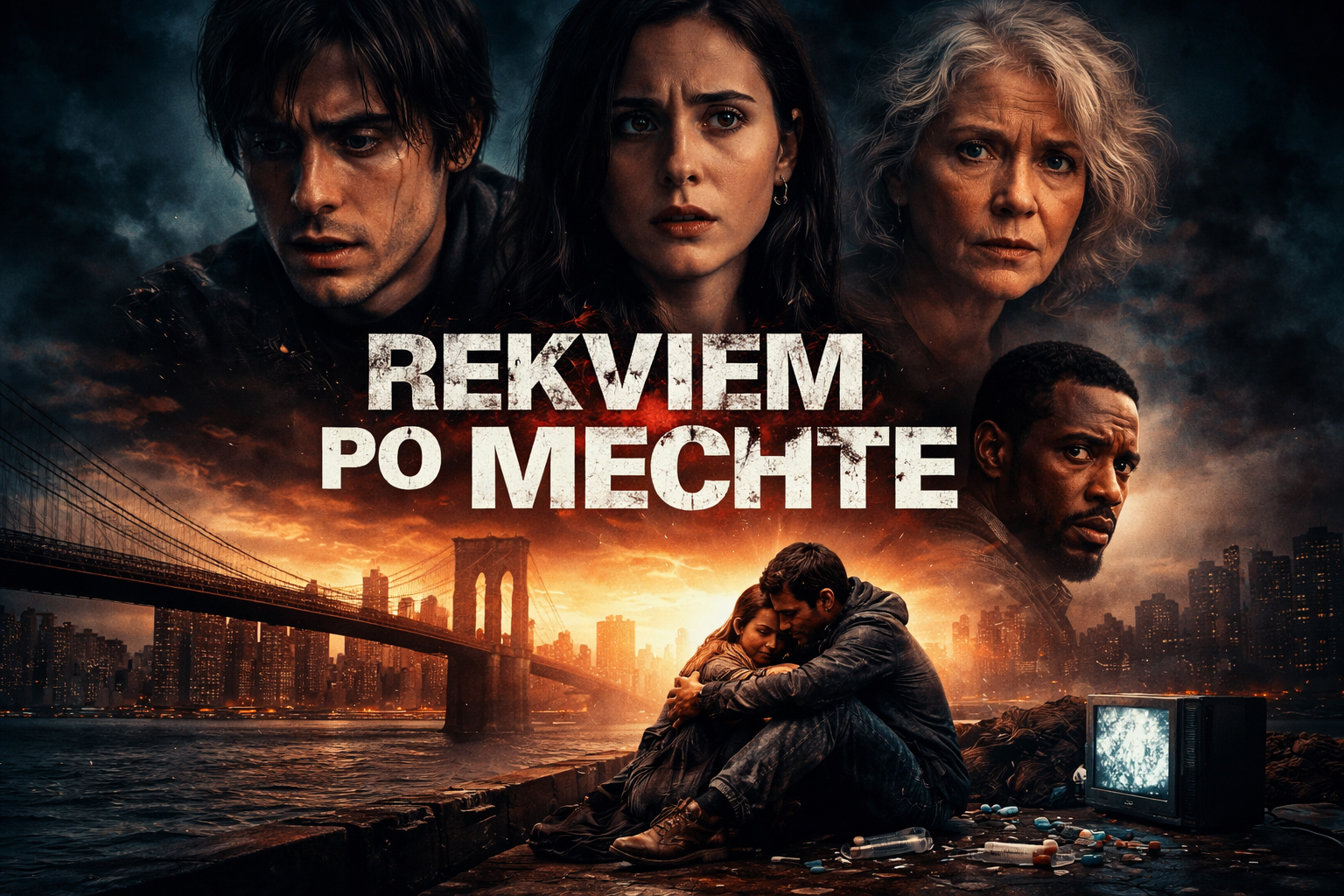
rekviem po mechte
Few films in the history of cinema possess the power to leave an audience in a state of collective, stunned silence. Darren Aronofsky’s Requiem for a Dream—known to many international audiences as Rekviem po mechte—is not merely a movie about the dangers of substance abuse. It is a visceral, high-velocity exploration of human yearning, the fragility of the psyche, and the devastating cost of chasing an unattainable version of the American Dream.
Released in 2000 and based on the 1978 novel by Hubert Selby Jr., the film has transcended its “drug movie” label to become a landmark of psychological horror. It doesn’t just show you a story; it forces you to feel the neurological twitch of addiction through its groundbreaking editing and haunting score.
The Architecture of a Nightmare: Understanding the Narrative Structure
The film is meticulously divided into three seasonal chapters: Summer, Fall, and Winter. This progression is not accidental; it mirrors the natural cycle of life, but in reverse—moving from the warmth of hope to the frozen isolation of total collapse.
Summer: The Illusion of Control
In the “Summer” segment, everything feels possible. Harry Goldfarb (Jared Leto) and his girlfriend Marion (Jennifer Connelly) are in the honeymoon phase of both their relationship and their business venture. Along with Harry’s best friend Tyrone (Marlon Wayans), they find a rhythm. The lighting is bright, the music is upbeat, and the drug use is framed as a tool for empowerment. They believe they are “getting ahead.” This is the peak of the “Dream”—the belief that they can manipulate reality to suit their desires without paying the piper.
Fall: The Gradual Descent
As the season shifts to “Fall,” the consequences begin to ripen. The supply dries up, the “easy money” becomes a burden, and the physical toll of their habits starts to manifest. The editing becomes faster, more frantic. We see the characters beginning to compromise their morals—not out of malice, but out of a desperate need to maintain the status quo established in the summer. The warmth is gone, replaced by a chilling realization that the ground is slipping beneath them.
Winter: The Reality of the Void
“Winter” is the endgame. It is the destination of every choice made in the previous seasons. By the time we reach this chapter, the characters are no longer chasing a dream; they are simply trying to survive the nightmare. The color palette turns a sterile, freezing blue and grey. The resolution is not one of redemption, but of total, agonizing stasis.
The Four Faces of Addiction: Character Analysis
While many films focus on a single protagonist, Rekviem po mechte functions as a quartet. Each character represents a different facet of how the human spirit can be hollowed out.
Harry and Marion: The Erosion of Love
Harry and Marion’s relationship is initially the emotional heart of the film. They represent the youthful belief that love can conquer all, even the dark pull of heroin. However, the film shows how addiction eventually cannibalizes intimacy. By the final act, Harry and Marion are no longer partners; they are two individuals trapped in separate hells, willing to betray one another—and themselves—for a fix. Marion’s descent into the underworld of “Big Tim” is one of the most harrowing depictions of the loss of autonomy in modern cinema.
Tyrone C. Love: The Cycle of the Streets
Tyrone serves as the grounding element of the trio. His motivations are deeply rooted in his childhood and a desire to make his mother proud. Unlike Harry and Marion, who come from somewhat more comfortable backgrounds, Tyrone is a victim of systemic cycles. His ending—laboring in a racially charged, abusive prison system—highlights the grim reality that for some, the “Dream” was rigged from the start.
Sara Goldfarb: The Loneliness of the American Dream
Perhaps the most devastating performance in the film belongs to Ellen Burstyn as Sara Goldfarb. Her addiction isn’t to a street drug, but to the promise of “being seen.” When she receives a phone call claiming she’s been selected for a television game show, her life finds a sudden, frantic purpose.
Sara becomes addicted to weight-loss pills (amphetamines) to fit into a red dress from her youth. Her story is a critique of a society that discards the elderly and prizes superficial beauty above all else. Her descent into “refrigerator hallucinations” and eventual institutionalization is a masterclass in psychological horror because it feels so tragically avoidable.
Cinematic Language: Why Rekviem po Mechte Stays With You
Darren Aronofsky used a variety of experimental techniques to put the viewer inside the characters’ heads. This isn’t passive storytelling; it’s sensory bombardment.
Hip-Hop Montage: The Visual Pulse of Addiction
Aronofsky and editor Jay Rabinowitz utilized what they called “Hip-Hop Montage”—extreme close-ups of drug paraphernalia, pupils dilating, and blood flowing, accompanied by sharp, rhythmic sound effects. While a standard film might have 600 to 700 cuts, Rekviem po mechte has over 2,000. This rapid-fire editing mimics the “hit”—the rush of the substance followed by the jarring return to reality.
Soundscapes of Despair: The Impact of Clint Mansell’s Score
It is impossible to discuss the film without mentioning the score by Clint Mansell, performed by the Kronos Quartet. The central theme, Lux Aeterna, has become one of the most recognizable pieces of music in film history. It is repetitive, haunting, and builds to a crescendo that feels like a panic attack. The music doesn’t just accompany the images; it drives the needle deeper into the viewer’s psyche.
Beyond the Substance: Themes of Modern Alienation
To view Rekviem po mechte only as an anti-drug film is to miss its broader social commentary.
The Perversion of the American Dream
The film suggests that the “Dream” itself is the ultimate narcotic. Whether it’s the dream of wealth (Harry and Tyrone), the dream of artistic fulfillment (Marion), or the dream of fame (Sara), the characters are all addicted to a future version of themselves. They are so focused on who they could be that they destroy who they are.
Technology and Media as Narcotics
Sara Goldfarb’s storyline explicitly links television to addiction. The game show host, Tappy Tibbons, and his hollow mantras of “Join us in helping you!” represent the predatory nature of mass media. It sells a false sense of community to the lonely, leading them down a path of consumption that can never be satisfied.
From Page to Screen: Hubert Selby Jr. and Darren Aronofsky
The film owes its uncompromising soul to Hubert Selby Jr., who also wrote Last Exit to Brooklyn. Selby was a writer who understood physical and emotional pain intimately. Aronofsky’s genius was in translating Selby’s rhythmic, stream-of-consciousness prose into a visual language. While the book is even more bleak (hard as that is to imagine), the film remains remarkably faithful to the core message: that the things we use to fill the holes in our lives often end up making those holes much larger.
The Legacy of a Masterpiece: Why We Still Watch It
Despite its reputation as a film you “only watch once,” Rekviem po mechte continues to find new audiences. Its influence can be seen in everything from music videos to modern television dramas like Euphoria. It serves as a reminder of the power of cinema to provoke visceral reactions and to hold a mirror up to the darkest corners of the human experience.
The film’s final sequence—a montage of the four characters curling into the fetal position as the screen fades to white—is one of the most iconic endings in history. It signifies a return to the womb, a desire to erase the pain of existence, and the ultimate failure of their respective dreams.
Conclusion: The Cost of Chasing Ghosts
Rekviem po mechte is a difficult watch, but it is an essential one. It challenges the viewer to examine their own “red dresses” and “get-rich-quick” schemes. It asks us what we are willing to sacrifice for a moment of numbness or a second of fame.
In the end, the “requiem” isn’t for the characters themselves, but for the beautiful, impossible dreams they chased until there was nothing left of them. It is a masterpiece of empathy, born of terror, and it remains as relevant today as it was over two decades ago.
FAQs
What does “Rekviem po mechte” mean?
It is the Russian translation of “Requiem for a Dream,” referring to a musical mass for the dead, symbolized here as the death of the characters’ hopes and dreams.
Is the movie based on a true story?
No, it is based on the 1978 novel by Hubert Selby Jr., though it draws on his observations of real-world addiction and poverty in mid-century America.
What is the significance of the “Red Dress”?
For Sara Goldfarb, the red dress represents her youth, her late husband’s love, and a time when she felt valued. Her obsession with fitting into it drives her pills-induced descent.
Why is the movie divided into seasons?
The seasons symbolize the lifecycle of addiction: Summer (the honeymoon phase), Fall (the consequences), and Winter (the total loss of self)
Who composed the music for Rekviem po mechte?
The iconic score was composed by Clint Mansell and performed by the Kronos Quartet.
About the Author