Psoriasis vs Eczema: Complete Guide to Skin Conditions
Your skin suddenly erupts in red, itchy patches that won’t go away. You scratch constantly, feeling frustrated and embarrassed. Is it psoriasis or eczema? Both conditions look similar but require different treatments. Understanding the distinction between these chronic skin disorders empowers you to seek proper care and finally find relief from persistent discomfort.
What Is Psoriasis? Definition & Meaning
Psoriasis is an autoimmune skin condition where your immune system attacks healthy skin cells, causing rapid cell turnover. Normal skin cells replace themselves every 28-30 days, but psoriasis speeds this process to just 3-4 days. This acceleration creates thick, scaly patches called plaques that appear silver-white or gray on the skin surface.
The condition affects approximately 125 million people worldwide according to the National Psoriasis Foundation. These plaques typically develop on elbows, knees, scalp, and lower back, though they can appear anywhere on your body.
Key characteristics of psoriasis:
- Thick, raised patches with defined borders
- Silver or white scales on top of red inflammation
- Patches feel dry and may crack or bleed
- Often symmetrical on both sides of the body
What Is Eczema? Definition & Meaning
Eczema, medically known as atopic dermatitis, represents a group of inflammatory skin conditions causing dry, itchy, and inflamed skin. Unlike psoriasis, eczema stems from a damaged skin barrier that allows moisture to escape and irritants to enter. This barrier dysfunction triggers inflammatory responses that create persistent itching and rashes.
The American Academy of Dermatology reports that eczema affects over 31 million Americans. The condition commonly begins in childhood, though adults can develop it at any age.
Key characteristics of eczema:
- Red or brownish-gray patches without thick scales
- Intense itching that worsens at night
- little, elevated lumps that could leak liquid when scraped
- Rough, sensitive, or swollen skin from scratching
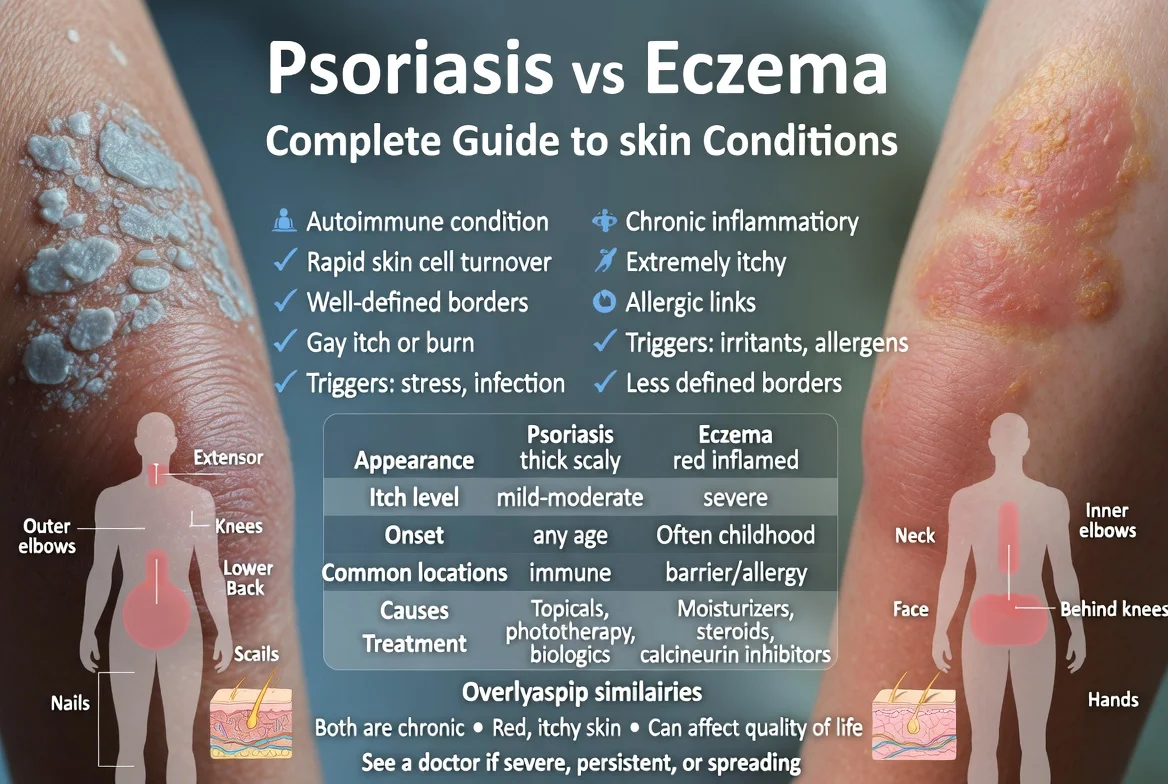
Psoriasis vs Eczema: Complete Comparison Table
| Feature | Psoriasis | Eczema |
| Cause | Autoimmune disorder | Barrier dysfunction & genetic factors |
| Age of Onset | Usually 15-35 years or 50-60 years | Typically begins in infancy or early childhood |
| Appearance | Thick, raised plaques with silver scales | Red, inflamed patches without thick scaling |
| Texture | Dry, scaly, well-defined borders | Oozing, crusting, poorly defined borders |
| Location | Elbows, knees, scalp, lower back | Face, neck, wrist creases, behind knees |
| Itch Level | Mild to moderate | Severe, often unbearable |
| Genetic Link | 40% have family history | 80% have family history of allergic conditions |
| Triggers | Stress, infections, medications | Allergens, irritants, temperature changes |
| Pattern | Symmetrical on both body sides | Can be asymmetrical |
| Associated Conditions | Psoriatic arthritis, cardiovascular disease | Asthma, hay fever, food allergies |
How Do Psoriasis and Eczema Look Different?
Visual differences between psoriasis vs eczema help distinguish these conditions at first glance. Psoriasis creates well-demarcated patches with clear boundaries separating affected skin from healthy skin. These plaques rise noticeably above the surrounding skin surface and feature distinctive silvery-white scales that flake off when scratched.
Eczema presents with poorly defined patches that gradually blend into normal skin. The affected areas appear redder and wetter, particularly during flare-ups when intense scratching causes the skin to weep clear fluid. You’ll notice thickened, leathery skin (lichenification) in chronic eczema from repeated scratching over time.
Psoriasis appearance indicators:
- Salmon-pink or red base covered by silvery scales
- Uniform thickness across the patch
- Bleeds easily when scales are removed (Auspitz sign)
- Nail changes including pitting and separation
Eczema appearance indicators:
- Dark red to brownish discoloration
- Crusty, weeping lesions during active phases
- Skin appears swollen and inflamed
- No nail involvement typically
What Causes Psoriasis vs Eczema?
Understanding the root causes of psoriasis vs eczema reveals why treatments differ significantly. Psoriasis originates from an overactive immune system that mistakenly identifies skin cells as threats. Your T-cells (white blood cells) attack healthy skin cells, triggering excessive production of new cells that pile up on the surface.
Eczema develops from a combination of genetic mutations affecting skin barrier proteins (particularly filaggrin) and environmental factors. Your skin cannot retain moisture properly, becoming vulnerable to allergens, bacteria, and irritants that penetrate the weakened barrier.
Psoriasis triggers:
- Bacterial infections like strep throat
- Skin injuries (cuts, scrapes, bug bites)
- Chronic stress and anxiety
- Cold, dry weather conditions
- Certain medications (beta-blockers, lithium, antimalarials)
- Smoking and heavy alcohol consumption
Eczema triggers:
- Allergens (pollen, pet dander, dust mites)
- Harsh soaps and detergents
- Synthetic fabrics and wool
- Extreme temperature fluctuations
- Sweating and overheating
- Food allergies (dairy, eggs, nuts, soy)
Psoriasis vs Eczema: Symptoms Comparison
Recognizing symptom patterns helps you identify which condition affects your skin. Psoriasis symptoms remain relatively stable with occasional flare-ups triggered by specific factors. The plaques persist for weeks or months, sometimes clearing completely during remission periods.
Eczema symptoms fluctuate dramatically, with intense flares alternating with calm periods. The hallmark symptom is severe itching that precedes visible rashes—you feel the itch before seeing any skin changes.
Primary psoriasis symptoms:
- Raised, thick patches covered with scales
- Burning or soreness in affected areas
- Dry, cracked skin that may bleed
- Stiff, swollen joints (psoriatic arthritis)
- Thickened, ridged, or pitted nails
Primary eczema symptoms:
- Intense itching, especially at night
- Red to brownish-gray patches
- Small, fluid-filled blisters
- Crusty, oozing skin after scratching
- Thickened, scaly skin from chronic rubbing
Where Do Psoriasis and Eczema Appear on the Body?
Location patterns provide valuable diagnostic clues when comparing psoriasis vs eczema. Psoriasis favors body areas with thicker skin that experience repeated friction or pressure. The condition shows preference for extensor surfaces—outer parts of joints that stretch when bent.
Eczema gravitates toward flexural areas—skin folds where moisture and friction increase. Infants commonly develop eczema on their cheeks and scalp, while older children and adults see patches in elbow creases and behind knees.
Common psoriasis locations:
- Elbows and knees (outer surfaces)
- Scalp and hairline
- Lower back and buttocks
- Palms and soles
- Fingernails and toenails
- Face (less common)
Common eczema locations:
- Inner elbows and behind knees
- Wrists and ankles
- Neck and chest
- Hands and feet
- Face and eyelids
- Behind ears
How Are Psoriasis and Eczema Diagnosed?
Accurate diagnosis requires professional medical evaluation, though understanding the diagnostic process helps you prepare for appointments. Dermatologists typically identify psoriasis vs eczema through visual examination combined with medical history review.
Your doctor examines the appearance, texture, and distribution of skin lesions while asking about symptom timing, family history, and potential triggers. According to the Mayo Clinic, most cases receive diagnosis through clinical observation alone.
Diagnostic methods:
- Physical examination: Close inspection of affected skin areas
- Medical history: Family history of skin conditions, allergies, or autoimmune diseases
- Skin biopsy: Small tissue sample examined under microscope when diagnosis remains unclear
- Allergy testing: Patch tests or blood work for suspected eczema triggers
- Fungal culture: Ruling out infections that mimic these conditions
Dermatologists look for specific markers—the Auspitz sign (pinpoint bleeding when scales are removed) strongly suggests psoriasis, while the “itch-scratch cycle” with visible scratch marks points toward eczema.
Treatment Options for Psoriasis vs Eczema
Treatment approaches differ significantly because psoriasis vs eczema have distinct underlying mechanisms. Psoriasis treatments focus on slowing excessive skin cell production and calming immune system overactivity. Eczema treatments prioritize restoring the skin barrier and reducing inflammation.
Psoriasis Treatments
Topical medications:
- Corticosteroid creams and ointments reduce inflammation
- Vitamin D analogues (calcipotriene) slow skin cell growth
- Retinoids normalize skin cell development
- Coal tar preparations reduce scaling and inflammation
- Salicylic acid removes scales
Systemic medications:
- Biologics target specific immune system proteins
- Methotrexate suppresses immune system activity
- Cyclosporine reduces immune responses
- Oral retinoids slow skin cell production
Light therapy:
- UVB phototherapy slows skin cell turnover
- PUVA combines medication with UVA light exposure
- Laser therapy targets specific plaques
Eczema Treatments
Topical treatments:
- Moisturizers and emollients repair skin barrier (apply multiple times daily)
- Topical corticosteroids control inflammation during flares
- Calcineurin inhibitors (tacrolimus, pimecrolimus) for sensitive areas
- PDE4 inhibitors (crisaborole) reduce inflammation
Systemic options:
- Dupilumab (Rinvoq) blocks proteins causing inflammation
- Oral corticosteroids for severe flares (short-term only)
- Immunosuppressants for resistant cases
- JAK inhibitors reduce immune system activity
Supportive care:
- Wet wrap therapy soothes severe flares
- Bleach baths reduce bacterial colonization
- Antihistamines relieve nighttime itching
- Identification and avoidance of personal triggers
Living with Psoriasis vs Eczema: Daily Management Tips
Managing chronic skin conditions requires consistent daily habits that prevent flares and minimize discomfort. Both psoriasis vs eczema benefit from gentle skincare routines, though specific approaches vary.
General skincare practices:
For both conditions:
- Take short, lukewarm showers (avoid hot water)
- Use fragrance-free, gentle cleansers
- Pat skin dry instead of rubbing
- Apply moisturizer immediately after bathing
- Wear soft, breathable fabrics like cotton
- Manage stress through meditation, yoga, or therapy
- Maintain healthy weight and exercise regularly
Psoriasis-specific tips:
- Remove scales gently before applying medication
- Get regular sunlight exposure (with sun protection)
- Avoid skin injuries that trigger new plaques
- Limit alcohol consumption
- Monitor for joint pain indicating psoriatic arthritis
Eczema-specific tips:
- Keep fingernails short to minimize scratching damage
- Use hypoallergenic laundry detergent
- Remove tags from clothing
- Install humidifiers in dry environments
- Keep rooms cool to prevent sweating
- Identify and eliminate allergen triggers
Can You Have Both Psoriasis and Eczema?
Yes, you can have both conditions simultaneously, though this occurs rarely. Approximately 1-2% of people with chronic skin conditions experience both psoriasis vs eczema. Having both complicates diagnosis and treatment since the conditions require different therapeutic approaches.
When both exist together, patches may appear in distinct locations following each condition’s typical distribution pattern. Psoriasis plaques develop on elbows and knees while eczema affects skin folds and flexural areas. Some individuals develop one condition first, then manifest the second years later.
Challenges of concurrent conditions:
- Treatment interactions between psoriasis and eczema medications
- Difficulty identifying which condition causes specific symptoms
- Increased skin sensitivity from multiple active inflammatory processes
- Higher risk of secondary skin infections
Working with an experienced dermatologist becomes essential when managing both conditions. Your treatment plan must address each disorder’s unique needs while avoiding medication conflicts.
Complications of Psoriasis vs Eczema
Both conditions carry risks beyond visible skin symptoms. Understanding potential complications motivates proper treatment adherence and regular medical monitoring.
Psoriasis complications:
Physical complications:
- Psoriatic arthritis affecting 30% of psoriasis patients
- Increased cardiovascular disease risk
- Higher rates of diabetes and metabolic syndrome
- Eye conditions (uveitis, conjunctivitis)
- Kidney disease in severe cases
Psychological impacts:
- Depression affects up to 30% of patients
- Social anxiety and isolation
- Reduced quality of life
- Sleep disturbances from discomfort
Eczema complications:
Physical complications:
- Skin infections (bacterial, viral, fungal) from broken skin
- Asthma and hay fever (atopic march)
- Permanent skin discoloration from chronic inflammation
- Sleep deprivation from intense nighttime itching
- Hand dermatitis affecting work and daily activities
Psychological impacts:
- Anxiety about appearance and flares
- Depression from chronic discomfort
- School or work performance issues
- Social withdrawal and relationship strain
Prevention Strategies: Reducing Flares
While you cannot prevent psoriasis vs eczema entirely, strategic lifestyle modifications significantly reduce flare frequency and severity. Prevention focuses on avoiding known triggers while strengthening your skin’s natural defenses.
Psoriasis prevention:
Daily habits:
- Moisturize skin twice daily with thick creams or ointments
- Manage stress through regular relaxation practices
- Avoid skin trauma (cuts, scratches, sunburns)
- Treat infections promptly, especially strep throat
- Limit alcohol intake to reduce flare risk
- Quit smoking to improve treatment effectiveness
Environmental modifications:
- Use humidifiers during dry seasons
- Protect skin during cold weather
- Get moderate sun exposure safely
- Maintain consistent sleep schedule
Eczema prevention:
Daily habits:
- Apply moisturizer immediately after bathing and throughout the day
- Identify personal triggers through elimination diets or journals
- Bathe in lukewarm water for less than 10 minutes
- Choose fragrance-free products for skin and laundry
- Wear gloves when using cleaning products
- Keep indoor temperatures moderate
Environmental modifications:
- Remove carpet and heavy drapes that collect dust
- Use allergen-proof bedding covers
- Wash bedding weekly in hot water
- Keep pets out of bedrooms if allergic
- Install HEPA air filters
- Control indoor humidity between 30-50%
When to See a Doctor About Psoriasis vs Eczema
Knowing when to seek medical attention ensures you receive timely treatment before conditions worsen. Some situations require immediate professional evaluation rather than home management.
Schedule an appointment if:
- Skin symptoms persist despite over-the-counter treatments
- Rashes cover large body areas or spread rapidly
- Pain, swelling, or joint stiffness develops
- You experience severe itching disrupting sleep or daily activities
- Skin changes affect your emotional well-being or self-esteem
Seek urgent care if:
- Fever accompanies skin symptoms (suggests infection)
- Widespread redness covers most of your body
- Skin weeps, crusts, or shows signs of bacterial infection
- Severe pain makes movement difficult
- Blisters form suddenly across large areas
- Existing treatment suddenly stops working
Regular follow-up appointments help monitor treatment effectiveness and adjust medications as needed. The National Eczema Association recommends establishing care with a dermatologist who specializes in chronic inflammatory skin conditions.
Latest Research and Treatment Advances
Scientific understanding of psoriasis vs eczema continues evolving, bringing new treatment options that offer hope for better symptom control. Recent breakthroughs target specific immune pathways with greater precision and fewer side effects.
Psoriasis research advances:
Biologic medications:
- IL-17 inhibitors (secukinumab, ixekizumab) showing 75-90% skin clearance
- IL-23 inhibitors (guselkumab, tildrakizumab) with extended dosing intervals
- Dual IL-17A/F inhibitors providing enhanced efficacy
Emerging treatments:
- JAK inhibitors in oral and topical forms
- Tyrosine kinase inhibitors targeting multiple inflammatory pathways
- Microbiome-based therapies addressing gut-skin axis
- Gene therapy approaches in early clinical trials
Eczema research advances:
Targeted therapies:
- Dupilumab revolutionizing moderate-to-severe eczema treatment
- Additional IL-4/IL-13 inhibitors in development
- Oral JAK inhibitors (upadacitinib, abrocitinib) for severe cases
- Topical JAK inhibitors for localized treatment
Innovative approaches:
- Microbiome restoration therapies
- Barrier repair technologies with ceramides and filaggrin boosters
- Allergen immunotherapy for specific triggers
- Stress-reduction interventions showing clinical benefits
Frequently Asked Questions
Is it possible for psoriasis to develop into eczema or vice versa?
No, psoriasis cannot transform into eczema or vice versa because they are fundamentally different conditions with distinct causes. Psoriasis stems from autoimmune dysfunction while eczema results from barrier defects and allergic tendencies. However, you can develop both conditions separately at different times in your life. Some people receive an initial misdiagnosis that gets corrected once a dermatologist performs thorough evaluation.
Which condition is more serious: psoriasis or eczema?
Neither condition is universally “more serious”—severity depends on individual cases and associated complications. Severe psoriasis carries higher risks of psoriatic arthritis, cardiovascular disease, and metabolic disorders. Severe eczema increases infection risks and significantly impacts quality of life through sleep disruption and psychological distress. Both conditions require professional management to prevent complications and maintain skin health.
Are psoriasis and eczema contagious?
Psoriasis and eczema are not communicable in any kind. You cannot catch these conditions from touching someone who has them or sharing personal items. Both conditions result from internal factors—immune system dysfunction in psoriasis and genetic barrier defects in eczema. This misconception causes unnecessary stigma, so educating others helps people with these conditions feel more comfortable in social situations.
Can diet affect psoriasis vs eczema?
Diet influences both conditions but in different ways. Anti-inflammatory diets rich in omega-3 fatty acids, fruits, and vegetables may reduce psoriasis symptoms, while limiting alcohol and processed foods helps prevent flares. For eczema, identifying and eliminating food allergens (common triggers include dairy, eggs, nuts, soy, and wheat) often improves symptoms significantly. Keep a food diary to track correlations between meals and skin reactions, then work with an allergist to confirm specific sensitivities.
Do psoriasis and eczema go away permanently?
Both psoriasis vs eczema are chronic conditions without permanent cures, though they often go into remission where symptoms disappear for months or years. Childhood eczema frequently improves significantly or resolves entirely by adolescence, though about 50% of people experience symptoms into adulthood. Psoriasis usually lasts a lifetime and varies in intensity, but with the right care, it can be completely eradicated for long periods of time. New treatments continue improving long-term outcomes.
Can stress cause psoriasis or eczema flares?
Stress acts as a powerful trigger for both psoriasis vs eczema flares through its effects on immune function and inflammation. During stressful periods, your body releases cortisol and other stress hormones that disrupt normal immune regulation, triggering psoriasis plaques or eczema patches. Managing stress through meditation, exercise, adequate sleep, and therapy reduces flare frequency and severity. Many patients notice direct correlations between stressful life events and symptom worsening.
Conclusion
Understanding the differences between psoriasis vs eczema empowers you to identify your condition accurately and pursue appropriate treatment. While both create uncomfortable skin symptoms, their distinct causes, appearances, and triggers require different management approaches. Psoriasis originates from autoimmune dysfunction creating thick, scaly plaques, while eczema stems from barrier defects causing intensely itchy, inflamed patches.
Modern treatments offer excellent symptom control for both conditions, from topical medications to advanced biologics. Working with a qualified dermatologist ensures you receive personalized care addressing your specific needs. Remember that managing chronic skin conditions requires patience and consistency—finding the right treatment combination takes time, but relief is achievable.
Take action today by documenting your symptoms, identifying personal triggers, and scheduling an appointment with a dermatologist. Your skin health improves dramatically when you understand your condition and commit to proper treatment. Share your experiences with others facing similar challenges, as building community support strengthens your journey toward clearer, more comfortable skin.