Piercing Bump vs Keloid: What’s the Real Difference?
Your new piercing looked perfect until a mysterious bump appeared overnight. Now panic sets in—is this normal healing or something serious? Thousands struggle to distinguish between harmless piercing bumps and keloids, leading to unnecessary stress and wrong treatments. Understanding the exact difference between these two skin reactions saves time, money, and prevents permanent scarring.
What Are Piercing Bumps?
Piercing bumps are temporary skin reactions that develop around new or healing piercings. These raised areas appear when your body responds to trauma from the piercing needle or ongoing irritation.
Most piercing bumps resolve within 2-8 weeks with proper care. They typically feel soft, movable, and contain fluid or pus. The bump stays confined to the piercing site without spreading beyond the original wound area.
Common causes include sleeping on fresh piercings, using harsh cleaning products, or snagging jewelry on clothing. Your body creates these bumps as a protective response, not a permanent skin change.
What Are Keloids?
Keloids are permanent scar tissue growths that extend beyond the original piercing wound. Unlike regular scars, keloids continue growing for months or years after the initial injury.
These firm, rubbery masses develop when your body produces excessive collagen during healing. Keloids feel hard to the touch and rarely disappear without medical intervention.
People with darker skin tones face higher keloid risk, with genetics playing a significant role. Once formed, keloids require professional treatment and may return even after removal.
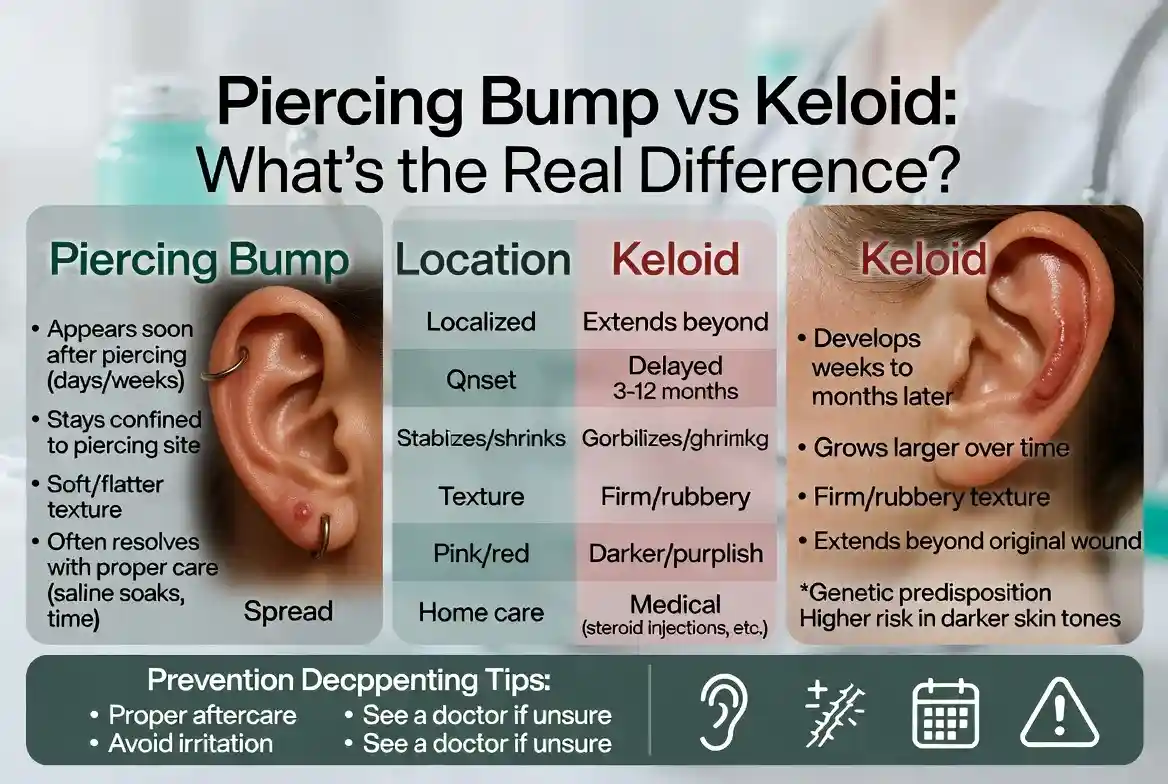
Piercing Bump vs Keloid: Complete Comparison Table
| Feature | Piercing Bump | Keloid |
| Size | Same size as piercing hole | Grows larger than original wound |
| Timeline | Appears within days | Develops after 3-12 months |
| Texture | Soft, fluid-filled | Hard, rubbery, firm |
| Color | Pink, red, or skin-toned | Dark red, purple, or brown |
| Pain Level | Mild tenderness | Can be painful or itchy |
| Healing Time | 2-8 weeks | Permanent without treatment |
| Spread Pattern | Stays at piercing site | Extends beyond wound area |
| Treatment | Home remedies work | Requires medical intervention |
| Recurrence | Rare with proper care | Common even after removal |
| Genetic Factor | Not inherited | Strong genetic component |
How to Identify a Piercing Bump
Recognizing piercing bumps early prevents confusion with more serious conditions. These telltale signs help you identify temporary irritation bumps:
Visual Characteristics:
- Small raised area directly around jewelry
- Pink or red coloration matching surrounding skin
- Clear or white fluid visible under skin surface
- Size remains consistent or shrinks over time
Physical Sensations:
- Slight tenderness when touched
- Warm feeling around affected area
- No severe pain or burning sensation
- Bump moves slightly under gentle pressure
Behavioral Patterns:
- Appears after changing jewelry or trauma
- Improves with salt water soaks
- Responds to better piercing hygiene
- Decreases when irritation stops
How to Identify a Keloid
Keloid identification requires understanding their unique characteristics. These permanent growths show distinct patterns that separate them from temporary bumps:
Physical Appearance:
- Shiny, smooth surface texture
- Raised tissue extending past piercing hole
- Dark purple, red, or brown coloration
- Irregular or claw-like shape
Growth Patterns:
- Continuous expansion over months
- No size reduction over time
- Firm consistency that doesn’t compress
- May develop tiny blood vessels on surface
Associated Symptoms:
- Intense itching sensations
- Tenderness that persists for months
- Feeling of tightness around area
- No drainage or fluid present
Common Types of Piercing Bumps
Different piercing bump types require specific treatment approaches. Understanding each variety helps you choose the right care method:
Irritation Bumps
These develop from mechanical friction or chemical irritation. They appear red and slightly swollen, usually resolving when the irritant is removed. Tight clothing, harsh soaps, or rough jewelry edges commonly trigger these bumps.
Pustules
Small pockets of pus form when bacteria enters the piercing channel. These white or yellow bumps resemble pimples and indicate minor infection. Proper cleaning eliminates most pustules within one week.
Granulomas
Pyogenic granulomas consist of excess blood vessels and tissue. They appear as red, raw bumps that bleed easily when touched. Medical evaluation becomes necessary if granulomas persist beyond two weeks.
Hypertrophic Scars
These raised scars stay within the original wound boundary. They feel firm but smaller than keloids and may flatten over 6-12 months. Hypertrophic scars respond well to pressure therapy and silicone treatments.
What Causes Piercing Bumps?
Understanding root causes prevents future bump formation. Multiple factors contribute to these unwanted skin reactions:
Mechanical Irritation:
- Sleeping directly on fresh piercings
- Tight jewelry that restricts blood flow
- Frequent touching with unwashed hands
- Clothing or accessories catching on jewelry
Chemical Triggers:
- Alcohol-based cleaning solutions
- Hydrogen peroxide damaging new tissue
- Hair products dripping onto piercing site
- Swimming pool chlorine exposure
Biological Factors:
- Individual immune system responses
- Natural skin healing variations
- Bacterial contamination from environment
- Allergic reactions to jewelry metals
Poor Aftercare Practices:
- Over-cleaning causing tissue damage
- Under-cleaning allowing bacteria buildup
- Using cotton swabs leaving fibers behind
- Removing jewelry before complete healing
What Causes Keloids?
Keloid formation involves complex biological processes beyond normal healing. These factors increase your likelihood of developing keloids:
Genetic Predisposition:
Research from the National Institutes of Health shows keloid tendency runs in families. If parents or siblings developed keloids, your risk increases substantially. Certain genetic markers make some individuals produce excess collagen during wound healing.
Ethnic Background:
People of African, Asian, and Hispanic descent face 15 times higher keloid risk than those with European ancestry. This biological difference stems from variations in skin structure and healing mechanisms.
Age Factors:
Keloids most commonly develop between ages 10-30 when skin cell production peaks. Hormonal changes during puberty and pregnancy can trigger excessive scar formation.
Location Matters:
Body areas under constant tension produce more keloids. Chest, shoulders, earlobes, and upper back represent high-risk zones for these overgrown scars.
Effective Treatments for Piercing Bumps
Most piercing bumps respond to simple home treatments. These proven methods accelerate healing and reduce inflammation:
Saline Soaks (Primary Method):
- Combine 8 ounces of warm water with 1/4 teaspoon sea salt
- Soak piercing for 5-10 minutes twice daily
- Use distilled or boiled cooled water
- Continue treatment until bump disappears
Chamomile Compress:
- Steep chamomile tea bag in hot water
- Cool to warm temperature
- Apply directly to bump for 5 minutes
- Repeat twice daily for anti-inflammatory benefits
Tea Tree Oil Application:
- Dilute 2-3 drops in carrier oil
- Apply sparingly with clean cotton swab
- Use once daily to reduce bacteria
- Stop if skin irritation develops
Aspirin Paste (Limited Use):
- Crush uncoated aspirin tablet
- Mix with few drops water to form paste
- Apply for 10 minutes maximum
- Use only 2-3 times weekly
When to Avoid Home Treatment:
- Severe pain or rapid growth
- Fever or red streaks from piercing
- Bump larger than pea size
- No improvement after two weeks
Medical Treatments for Keloids
Keloids require professional medical intervention for effective management. Healthcare providers offer these evidence-based treatment options:
Corticosteroid Injections:
Dermatologists inject triamcinolone directly into keloid tissue. This reduces inflammation and shrinks scar size over multiple sessions. According to the American Academy of Dermatology, this treatment shows 50-80% effectiveness when combined with other methods.
Surgical Removal:
Complete keloid excision followed by radiation therapy prevents recurrence. Surgery alone results in 50-80% regrowth rates, making combination therapy essential.
Cryotherapy (Freezing):
Liquid nitrogen treatments flatten keloids through controlled tissue destruction. Multiple sessions spaced 3-4 weeks apart produce gradual size reduction.
Laser Therapy:
Pulsed-dye lasers reduce keloid redness and thickness. This painless treatment requires 4-6 sessions for noticeable improvement.
Pressure Therapy:
Custom-fitted pressure earrings or clips compress keloids for 12-24 hours daily. Consistent use over 6-12 months flattens raised tissue.
Silicone Gel Sheets:
Medical-grade silicone worn 12 hours daily hydrates and softens keloid tissue. This method works best on smaller, newer keloids.
Prevention Strategies for Both Conditions
Preventing bumps and keloids starts before getting pierced. These protective measures minimize your risk:
Pre-Piercing Considerations:
- Research family history of keloid formation
- Choose professional piercers with APP certification
- Avoid piercing high-risk body areas
- Select implant-grade titanium or 14k+ gold jewelry
Proper Aftercare Protocol:
- Clean hands thoroughly before touching piercing
- Rinse piercing during daily shower
- Avoid rotating or moving jewelry unnecessarily
- Sleep on opposite side from new piercing
Lifestyle Modifications:
- Protect piercings during sports activities
- Keep hair products away from healing sites
- Remove jewelry before contact sports
- Maintain healthy diet supporting wound healing
Monitoring and Maintenance:
- Photograph piercing weekly to track changes
- Document any unusual symptoms immediately
- Schedule checkups with piercer at 2-week intervals
- Address problems before they worsen
When to Seek Medical Attention
Recognizing warning signs prevents minor issues from becoming serious problems. Contact healthcare providers when experiencing:
Emergency Symptoms:
- Fever above 100.4°F (38°C)
- Red streaks spreading from piercing
- Severe swelling affecting surrounding areas
- Intense pain unrelieved by over-counter medication
Concerning Changes:
- Bump growing rapidly over days
- Dark discoloration spreading outward
- Continuous bleeding or unusual discharge
- Complete jewelry rejection from skin
Persistent Problems:
- No improvement after 3 weeks home treatment
- Bump returning repeatedly after healing
- Hard lump developing months after piercing
- Skin texture changes around entire area
According to the Mayo Clinic, early professional evaluation provides better treatment outcomes and prevents permanent scarring complications.
Special Considerations for Different Piercing Locations
Each piercing location presents unique healing challenges. Understanding site-specific risks helps you provide targeted care:
Ear Cartilage Piercings
Cartilage heals slower than soft tissue, taking 6-12 months for complete recovery. These areas show higher bump and keloid rates due to limited blood flow. Avoid sleeping on healing cartilage piercings for at least 3 months.
Nose Piercings
Facial movement and makeup application increase irritation risk. Nose piercings develop bumps frequently from accidentally bumping or changing jewelry too early. Keep makeup away from healing nostril piercings.
Belly Button Piercings
Constant friction from waistbands makes navel piercings prone to irritation bumps. Wear loose, high-waisted clothing during the 6-9 month healing period.
Nipple Piercings
These sensitive piercings take 9-12 months healing and show higher infection rates. Sports bras and tight clothing trap moisture, creating bacterial breeding grounds.
Natural Remedies and Alternative Approaches
Beyond conventional treatments, certain natural methods support piercing bump healing. These approaches complement medical advice rather than replacing it:
Aloe Vera Application:
Pure aloe vera gel contains anti-inflammatory compounds that soothe irritated skin. Apply thin layer twice daily after cleaning piercing. Choose products without alcohol or added fragrances.
Vitamin E Oil:
This antioxidant supports skin repair and reduces inflammation. Pierce vitamin E capsule and apply oil directly to bump once daily. Discontinue if any allergic reaction occurs.
Honey Treatment:
Medical-grade honey possesses antibacterial properties that fight infection. Apply small amount to bump and cover with clean bandage for 20 minutes. Use only sterile, medical-grade honey products.
Apple Cider Vinegar (Diluted):
Mix equal parts apple cider vinegar with water. Apply with cotton ball for 5 minutes maximum. This acidic solution reduces bacteria but can irritate sensitive skin.
Calendula Oil:
This herbal remedy promotes wound healing and reduces inflammation. Mix 2-3 drops with carrier oil and apply to bump twice daily.
The Role of Jewelry Quality in Preventing Bumps
Jewelry composition directly impacts healing success and bump formation. Understanding material differences prevents allergic reactions and irritation:
Recommended Materials:
Implant-Grade Titanium (ASTM F136):
This biocompatible metal rarely causes allergic reactions. Titanium allows oxygen flow to healing tissue and resists bacteria buildup. Healthcare professionals worldwide recognize this as the safest piercing material.
14k or 18k Gold:
Solid gold (not plated) provides safe alternative for healed piercings. Ensure gold contains no nickel alloys that trigger reactions. White gold often contains nickel and should be avoided.
Niobium:
This hypoallergenic metal suits those with severe metal sensitivities. Niobium offers similar benefits to titanium at slightly lower cost.
Materials to Avoid:
- Surgical steel (contains nickel)
- Gold-plated jewelry (coating wears off)
- Sterling silver (oxidizes in healing wounds)
- Acrylic or plastic (harbors bacteria)
The Association of Professional Piercers provides comprehensive jewelry material guidelines ensuring safe healing experiences.
Understanding the Healing Timeline
Realistic healing expectations prevent premature jewelry changes and unnecessary worry. Different piercings follow distinct healing patterns:
Earlobe Piercings:
- Initial healing: 6-8 weeks
- Complete healing: 3-4 months
- Bump risk period: First 2 months
Cartilage Piercings:
- Initial healing: 3-6 months
- Complete healing: 6-12 months
- Bump risk period: First 6 months
Nose Piercings:
- Initial healing: 2-3 months
- Complete healing: 6-8 months
- Bump risk period: Months 2-4
Navel Piercings:
- Initial healing: 4-6 months
- Complete healing: 6-12 months
- Bump risk period: Throughout healing
Nipple Piercings:
- Initial healing: 6-9 months
- Complete healing: 9-12 months
- Bump risk period: First 8 months
During healing, tissue remains vulnerable to trauma and infection. Patience during this period prevents complications requiring extended treatment.
Frequently Asked Questions
How can I tell if my piercing bump is actually a keloid?
A piercing bump stays the same size or shrinks within weeks, feels soft, and contains fluid. Keloids grow continuously beyond the piercing hole, feel hard and rubbery, and develop months after the initial piercing. Keloids never disappear without medical treatment, while bumps resolve with proper care. If you have family history of keloids or the growth extends past the original wound, seek professional evaluation immediately.
Can piercing bumps turn into keloids if left untreated?
No, piercing bumps and keloids are fundamentally different conditions. Bumps result from temporary irritation or minor infection, while keloids develop from genetic predisposition to excessive scar tissue formation. However, repeatedly irritating a bump through poor care or trauma may trigger keloid formation in genetically susceptible individuals. Address bumps promptly to minimize any scarring risk.
What is the fastest way to get rid of a piercing bump?
Consistent saline soaks twice daily provide the fastest, safest bump resolution. Mix 1/4 teaspoon non-iodized sea salt with 8 ounces warm distilled water. Soak for 5-10 minutes, then gently pat dry. Stop touching or rotating jewelry, sleep on the opposite side, and avoid harsh chemicals. Most bumps improve within 1-2 weeks with this simple routine. If no improvement occurs after three weeks, consult a professional piercer or dermatologist.
Are certain people more likely to develop keloids from piercings?
Yes, genetics plays the primary role in keloid development. People of African, Asian, Hispanic, and Mediterranean descent face significantly higher keloid risk. Age 10-30 represents peak keloid formation years. If your parents or siblings developed keloids from any injury, you carry increased risk. Certain body areas like chest, shoulders, and upper ears also produce more keloids due to skin tension patterns.
Should I remove my jewelry if a bump appears?
Keep jewelry in place unless a healthcare provider advises removal. Taking out jewelry allows the piercing hole to close, trapping infection or fluid inside. This creates worse complications than the original bump. Continue cleaning routine and address the underlying cause—usually irritation or minor infection. Only remove jewelry if you experience severe allergic reaction or your doctor recommends removal for medical treatment.
Can I prevent keloids if I’m genetically prone to them?
You can reduce but not eliminate keloid risk. Avoid piercing high-tension areas like upper ear cartilage and chest. Choose experienced piercers who use proper technique minimizing tissue trauma. Follow aftercare instructions perfectly to prevent infection and excessive inflammation. Some dermatologists recommend preventive corticosteroid injections immediately after piercing for high-risk individuals. Consider whether the piercing value outweighs your keloid risk before proceeding.
Taking Control of Your Piercing Health
Understanding the difference between piercing bumps and keloids empowers you to make informed decisions about your body. Temporary bumps respond to simple home care, while keloids require professional medical intervention. Recognition of warning signs, commitment to proper aftercare, and realistic healing expectations create the foundation for successful piercing experiences.
Your piercing journey doesn’t end after leaving the studio. Daily attention to cleanliness, jewelry quality, and lifestyle factors determines long-term outcomes. Small preventive actions today prevent frustrating complications tomorrow.
Share your piercing experiences and questions in the comments below. Which prevention strategies worked best for you? Connect with others navigating similar healing journeys and build a supportive community focused on safe, beautiful body modification.