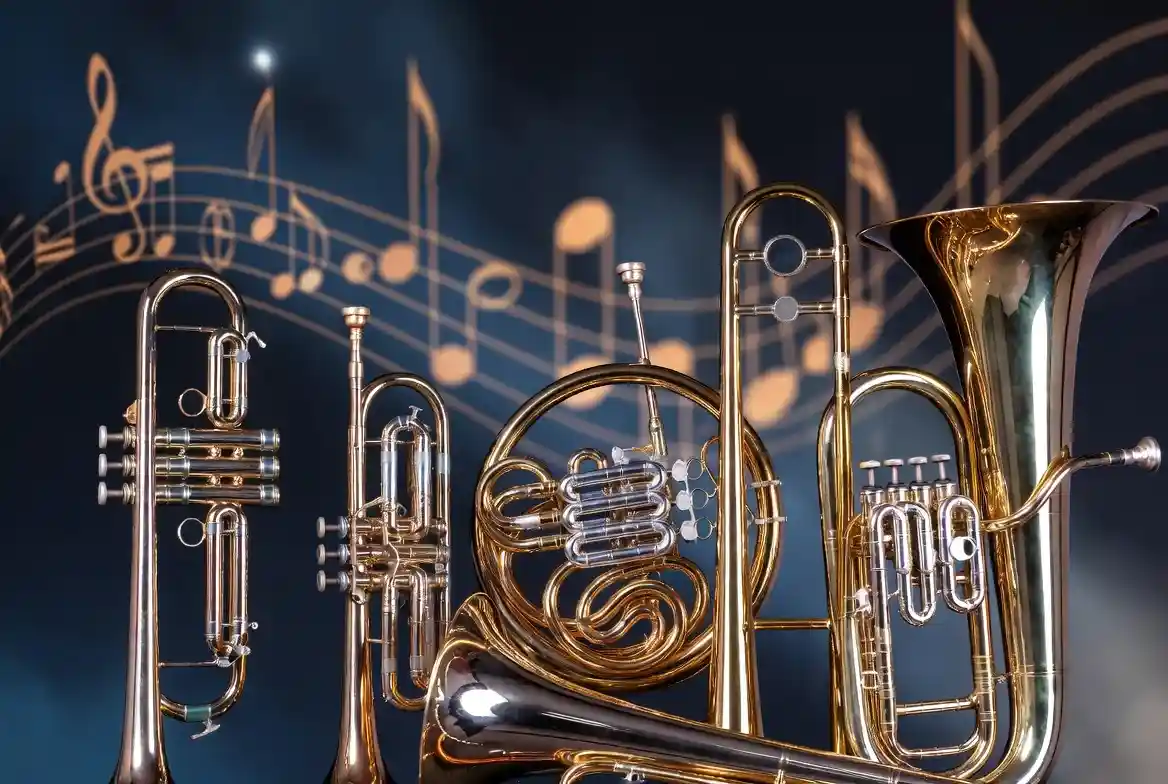
Your Ultimate Guide to Brass Instruments: Master Every Note
Struggling to choose the right brass instrument or produce that perfect, resonant tone? You’re not alone. Musicians everywhere face challenges with embouchure, tone quality, and instrument selection. This comprehensive guide eliminates the guesswork, providing proven strategies to help you understand, select, and master brass instruments. Whether you’re a beginner exploring your first trumpet or an advanced player perfecting your French horn technique, you’ll find actionable insights that transform your musical journey.
What Are Brass Instruments and How Do They Work?
Brass instruments are musical devices that produce sound through lip vibration against a cup-shaped mouthpiece. The player’s buzzing lips create air column vibrations within metal tubing, generating distinct musical tones. These instruments belong to the aerophone family, where sound originates from vibrating air.
The fundamental mechanism involves three components:
- Mouthpiece: Creates the initial vibration point
- Tubing: Amplifies and shapes the sound waves
- Bell: Projects the final tone outward
Most brass instruments use valves or slides to change tube length, altering pitch. When you press a valve, air redirects through additional tubing, lowering the pitch. The trombone uses a slide mechanism instead, offering smooth pitch transitions between notes.
According to research from the Acoustical Society of America, brass instrument sound quality depends heavily on bore shape, bell flare, and material composition. These factors explain why two trumpets can sound remarkably different even when playing identical notes.
The Five Main Types of Brass Instruments Every Musician Should Know
Trumpet
The trumpet stands as the highest-pitched brass instrument in standard orchestras. Its brilliant, piercing tone cuts through ensemble textures effortlessly. Three piston valves control pitch changes, making it accessible for beginners while offering virtuosic possibilities for advanced players.
Popular in jazz, classical, and contemporary music, the trumpet typically plays in B♭. Professional models include variations like the piccolo trumpet (higher register) and the flugelhorn (mellower tone).
Trombone
Unlike valve-based brass instruments, the trombone uses a telescoping slide mechanism. This design allows for true glissandos and microtonal adjustments impossible on valved instruments. The tenor trombone dominates orchestral and jazz settings, while bass trombones handle lower register work.
Players must develop precise slide position memory, as no physical markers indicate exact pitches. This challenge develops exceptional ear training and muscle memory.
French Horn
The French horn features over 12 feet of coiled tubing, producing warm, mellow tones. Its circular design and rear-facing bell create unique acoustic properties. Three or four rotary valves navigate its extensive range from deep bass to brilliant high notes.
Horn players often place their right hand inside the bell to adjust tone color and pitch. This technique, called hand stopping, expands the instrument’s expressive palette significantly.
Tuba
As the bass foundation of brass sections, the tuba provides harmonic support and rhythmic power. Its massive size produces the lowest pitches among standard brass instruments. Most tubas feature three to six valves, with larger models offering extended low range.
Despite stereotypes about slow, simple parts, tuba literature includes technically demanding solos requiring agility and endurance. Modern composers increasingly showcase the instrument’s melodic capabilities.
Euphonium
The euphonium bridges the gap between trombone and tuba with its tenor-range voice. Its conical bore produces a darker, richer sound than the cylindrical-bore trumpet or trombone. British brass bands feature the euphonium prominently, often assigning it lyrical solo passages.
Three or four valves provide chromatic facility throughout its range. Compensating systems on professional models improve intonation in the lower register.
How to Choose Your First Brass Instrument: A Practical Selection Guide
Selecting the right brass instrument shapes your entire musical experience. Consider these essential factors before purchasing:
Physical Compatibility
Your body size and dental structure matter significantly. Trumpet and French horn mouthpieces require different embouchure formations. Younger players or those with smaller hands might struggle with tuba valve spacing initially.
Musical Preferences
Different brass instruments dominate specific genres. Jazz ensembles rely heavily on trumpets and trombones. Orchestras need balanced sections including all five main types. Marching bands emphasize projection and durability.
Budget Considerations
Entry-level student models range from $400 to $1,200, while professional instruments cost $2,000 to $8,000+. Quality student instruments from reputable manufacturers like Yamaha, Bach, and Conn-Selmer provide excellent starting points.
Rental vs. Purchase
Many music stores offer rental programs with purchase options. This approach lets beginners test commitment levels before major investments. Monthly rental fees typically range from $25 to $60 depending on instrument type.
Consultation Resources
Visit local music educators or professional players for personalized advice. The National Association for Music Education (NAfME) provides teacher directories to help find qualified instructors in your area.
Mastering Embouchure: The Foundation of Brass Playing
Embouchure refers to the facial muscle position and lip placement used to produce sound. Proper embouchure development separates struggling players from successful ones. This skill requires patient, consistent practice over months and years.
Basic Embouchure Formation
Position your lips naturally, then firm the corners without excessive tension. Create a small aperture in the center where air will pass through. The mouthpiece rests against your lips, not pressed forcefully into them.
Common Embouchure Mistakes
- Excessive mouthpiece pressure causing lip damage
- Puffed cheeks reducing air control
- Incorrect jaw position limiting range
- Asymmetrical placement favoring one side
Development Exercises
Practice long tones daily, focusing on steady, centered sound production. Buzzing exercises without the mouthpiece strengthen facial muscles. Lip slurs between adjacent harmonics build flexibility without physical strain.
According to Philip Farkas’ authoritative book “The Art of French Horn Playing,” successful embouchure combines relaxation with focused energy. Tension in the wrong places restricts both range and endurance.
Breathing Techniques That Transform Your Brass Sound
Air management determines tone quality, endurance, and dynamic range. Proper breathing separates amateur sound from professional quality on all brass instruments.
Diaphragmatic Breathing
Inhale deeply, expanding your lower ribs and abdomen rather than raising shoulders. This technique maximizes lung capacity while maintaining upper body relaxation. Place one hand on your stomach to feel proper expansion during practice.
Air Speed and Direction
Fast air produces brighter tones and higher pitches. Lower notes and darker sounds are produced by slower air. Direct your air stream horizontally through the instrument rather than downward into it.
Breath Support
Maintain consistent abdominal pressure throughout phrases, preventing tone sagging or wavering. Think of supporting long tones the way you’d sustain a steady flame on a candle without extinguishing it.
Strategic Breathing Points
Plan breath locations during musical phrases, preferably at natural punctuation points. Circular breathing—simultaneously inhaling through the nose while expelling stored air—allows extended passages without breaks, though this advanced technique requires dedicated practice.
Essential Maintenance: Keeping Your Brass Instrument in Peak Condition
Regular maintenance prevents costly repairs and ensures consistent performance. Brass instruments require specific care routines depending on their valve or slide mechanisms.
Daily Maintenance Tasks
- Wipe down exterior after each playing session
- Empty condensation through water keys
- Brush out mouthpiece weekly
- Store instrument in case, not on stands
Weekly Maintenance
Valve instruments need oiling every 3-7 days depending on usage. Remove valves individually, apply 2-3 drops of valve oil, then reinsert carefully matching number alignments. Trombone slides require cream and spray lubricant for smooth movement.
Monthly Deep Cleaning
Full baths remove accumulated residue affecting tone and valve action. Use lukewarm water with mild dish soap, gentle brushes designed for brass instruments, and snake brushes for tubing. Rinse thoroughly and dry completely before reassembling.
Professional Servicing
Annual checkups by qualified technicians address issues beyond home maintenance. They check alignment, fix minor dents, replace worn felts and corks, and perform chemical cleanings that restore original brilliance.
The International Trumpet Guild recommends keeping maintenance logs tracking cleaning dates, repairs, and performance issues. This documentation helps identify recurring problems requiring professional attention.
Reading Music for Brass: Transposition and Clef Systems Explained
Brass instruments use different transpositions and clefs, creating initial confusion for beginners. Understanding these conventions unlocks the entire musical repertoire.
Transposing Instruments
Most brass instruments read music differently than concert pitch. B♭ trumpet players read C but produce B♭. French horns typically transpose in F. This system developed historically for simpler fingering patterns and consistent reading across instrument sizes.
Clef Usage
- Trumpet, French horn, euphonium: Treble clef
- Trombone, euphonium, tuba: Bass clef
- Trombone (alto parts): Tenor or alto clef occasionally
Transposition Practice
Develop transposition skills by playing simple melodies in different keys. Use piano scores as concert pitch references, then transpose to your instrument’s key. Digital apps like forScore now include transposition features that display parts in any desired key.
Why Transposition Matters
Ensemble playing requires understanding how your part relates to others. When the score shows a concert F, you’ll play different notes depending on your instrument. This knowledge helps with intonation adjustments and harmonic awareness.
Building Range and Flexibility on Brass Instruments
Range expansion and flexibility development require systematic, patient practice approaches. Forcing high notes with excessive pressure damages embouchure and limits progress.
Range Development Strategies
Start each practice session in the comfortable middle register. Gradually explore upward and downward, never straining. Use lip slurs (changing notes without valves/slide) to build natural flexibility between partials.
Clarke Technical Studies and Arban’s Method
These foundational books provide structured exercises for all brass instruments. Clarke’s exercises build strength through systematic patterns. Arban’s complete method addresses technique, articulation, and musicality comprehensively.
Pedal Tones and High Register
Pedal tones (notes below the normal range) strengthen embouchure and improve tone quality. Practice them softly, focusing on resonance rather than volume. High register development demands efficient air use and relaxed throat positioning.
Rest Intervals
Muscles need recovery time. Practice intense range work in short bursts (2-3 minutes) followed by rest periods. Total daily practice for beginners should stay under 30-45 minutes initially, gradually increasing as strength develops.
Brass Instruments in Different Musical Genres
Brass instruments adapt to virtually every musical style, each demanding specific techniques and tonal approaches.
Classical and Orchestral
Symphony orchestras feature complete brass sections performing complex, nuanced parts. Players must blend within sections while projecting during featured passages. Repertoire spans from Baroque (natural trumpet without valves) through contemporary compositions utilizing extended techniques.
Jazz and Improvisation
Jazz revolutionized brass playing, emphasizing individual expression and improvisation. Trumpet and trombone players developed specialized techniques: bent notes, growls, plunger mutes, and half-valving. Louis Armstrong, Dizzy Gillespie, and Miles Davis transformed trumpet possibilities, while J.J. Johnson elevated trombone to a bebop voice.
Marching and Brass Bands
These ensembles emphasize projection and visual presentation. Marching brass instruments often feature forward-facing bells for better audience projection. British-style brass bands use specific instrumentation centered around cornets, flugelhorns, and tenor horns.
Contemporary and Popular Music
Modern genres incorporate brass sections for punctuation, hooks, and texture. Ska, funk, and soul music feature tight horn sections playing rhythmic riffs. Recording studios increasingly call for brass players who read charts quickly and improvise creatively.
Common Challenges Brass Players Face and How to Overcome Them
Every brass musician encounters specific obstacles during their development. Recognizing and addressing these challenges accelerates progress.
Endurance Issues
Weak endurance indicates embouchure inefficiency or improper breathing. Build stamina gradually through consistent practice, never playing beyond mild fatigue. Instead of pushing through weary muscles, concentrate on relaxation and effective air utilization.
Intonation Problems
Brass instruments require constant pitch adjustments. Learn your instrument’s tendencies—which notes play sharp or flat naturally. Use tuners during practice but develop ear-based adjustments for performance. Pulling tuning slides outward lowers pitch; pushing inward raises it.
Articulation Clarity
Clean articulation separates notes distinctly without harshness. The tongue should move like saying “tah” or “dah,” touching behind the upper teeth. Double and triple tonguing (tuh-kuh, tuh-kuh-tuh) enable rapid passages beyond single-tongue speed limits.
Performance Anxiety
Stage fright affects brass players particularly since mistakes echo prominently. Preparation reduces anxiety—thorough practice builds confidence. Visualization techniques, controlled breathing before performances, and gradual exposure to performing situations all help manage nervousness.
The Science Behind Brass Instrument Acoustics
Understanding acoustic principles enhances your ability to control and improve sound production on brass instruments.
Harmonic Series
Brass instruments produce notes from the natural harmonic series. Without valves or slide positions, you can only play specific pitches determined by tube length. Valves add tubing length, accessing different harmonic series and filling chromatic gaps.
Standing Waves and Resonance
Sound waves traveling through brass tubing reflect at the bell, creating standing wave patterns. These patterns determine which frequencies resonate strongly (playable notes) and which cancel out. Bore shape dramatically affects which harmonics resonate clearly.
Material and Acoustic Properties
While metal composition (brass, silver, gold) affects tone subtly, bore dimensions and bell design matter far more acoustically. Research from the Journal of the Acoustical Society of America shows that psychological factors (players’ beliefs about materials) sometimes influence perception more than measurable acoustic differences.
Mouthpiece Acoustics
Mouthpiece dimensions affect resistance, tone color, and playability. Deeper cups produce darker tones; shallower cups brighten sound and ease high register playing. Rim diameter and contour affect comfort and endurance differently for each player.
Building a Practice Routine for Consistent Brass Progress
Structured practice yields faster improvement than unfocused playing. Develop routines addressing all technical and musical aspects systematically.
Warm-Up Phase (10-15 minutes)
Begin with gentle long tones in the middle register. Progress through simple lip slurs and scales. This phase prepares muscles and focuses concentration without taxing endurance.
Technical Work (15-20 minutes)
Address specific weaknesses: range extension, articulation patterns, or challenging scale passages. Use method books and etude collections providing graduated difficulty levels. Focus on quality over quantity—perfect repetitions engrain correct habits.
Musical Repertoire (15-25 minutes)
Work on assigned pieces or solo literature. Break difficult passages into small sections, practicing slowly with a metronome. Gradually increase tempo only after achieving accuracy and musical phrasing at slower speeds.
Cool-Down (5 minutes)
End sessions with easy, enjoyable playing in the comfortable range. This prevents ending on frustration and associates practice with positive feelings.
Practice Frequency
Daily 45-60 minute sessions benefit beginners more than infrequent marathon sessions. Advanced players might practice 2-3 hours daily, divided into multiple sessions allowing recovery.
Where to Find Quality Learning Resources for Brass Instruments
Numerous resources support brass players at every level, from complete beginners to advanced performers.
Private Instruction
One-on-one lessons with qualified teachers provide personalized feedback impossible to get otherwise. Teachers identify specific technical issues and prescribe targeted solutions. The Music Teachers National Association offers teacher directories searchable by location and specialty.
Online Learning Platforms
Websites like Brass Online, Trent Austin Method, and various YouTube channels offer free and subscription-based instruction. While convenient, online learning works best as supplementary material rather than replacing in-person guidance.
Method Books and Etudes
Standard texts include:
- Arban’s Complete Conservatory Method (trumpet, cornet, euphonium)
- Kopprasch Etudes (French horn)
- Bordogni Vocalises (trombone, euphonium)
- Blazhevich Studies (tuba)
Masterclasses and Workshops
Summer music camps and weekend workshops provide intensive instruction from multiple professionals. The International Trombone Festival, International Trumpet Guild conferences, and similar events offer performances, lectures, and networking opportunities.
Community Ensembles
Joining local bands, orchestras, or chamber groups applies skills in musical contexts. Community music-making builds sight-reading abilities, ensemble awareness, and performance experience while connecting with fellow musicians.
Frequently Asked Questions About Brass Instruments
Which brass instrument is easiest to learn for beginners?
The trumpet generally presents the most accessible starting point for beginners. Its smaller size fits younger players comfortably, valve mechanisms prove intuitive, and extensive teaching resources exist. However, “easiest” depends on individual physical characteristics and musical goals—some students naturally adapt better to trombone or euphonium instead.
How long does it take to sound good on brass instruments?
Most beginners produce recognizable tones within minutes, but developing pleasing sound quality requires 6-12 months of consistent practice. Intermediate proficiency typically takes 2-3 years. Professional-level playing demands 10,000+ hours over many years. Progress speed varies based on practice quality, natural aptitude, and instruction quality.
Can adults learn brass instruments successfully?
Absolutely. Adults bring advantages like discipline, understanding of practice strategies, and intrinsic motivation. Physical flexibility decreases slightly with age, but dedicated adult beginners regularly achieve high competency levels. Many professional brass players began as adults or switched instruments later in life successfully.
Why do brass instruments sound different from each other?
Bore shape determines fundamental tonal characteristics. Cylindrical bores (trumpet, trombone) produce brighter, more focused sounds. Conical bores (French horn, euphonium, tuba) generate warmer, darker tones. Bell size, flare rate, and mouthpiece dimensions further differentiate each instrument’s unique voice within the brass family.
How much should I spend on a quality brass instrument?
Student models from reputable manufacturers ($500-$1,200) provide everything beginners need for several years. Intermediate instruments ($1,500-$3,000) suit advancing high school and college students. Professional models ($3,000-$8,000+) offer refinement serious players appreciate. Avoid extremely cheap instruments under $300—poor manufacturing creates unnecessary frustration and impedes progress.
What accessories do brass players need besides the instrument?
Essential accessories include a quality mouthpiece (often requiring upgrades from stock versions), valve oil or slide lubricant, cleaning snake brushes, polishing cloth, music stand, metronome/tuner, and method books. Optional items include mutes (straight, cup, harmon), gig bags for transport, and humidification systems for wooden cases in dry climates.
Conclusion
Brass instruments offer lifelong musical rewards for dedicated players. This guide has covered fundamental concepts from acoustic principles to practice strategies, giving you a solid foundation for your musical journey. Start by selecting an instrument matching your physical characteristics and musical interests. Develop proper embouchure and breathing techniques from the beginning, as these fundamentals determine your long-term success.
Find a qualified teacher who can provide personalized feedback and guidance. Establish consistent practice routines focusing on both technical development and musical expression. Remember that progress happens gradually—patience and persistence matter more than natural talent.
The brass playing community welcomes newcomers enthusiastically. Connect with other musicians through local ensembles, online forums, and music festivals. Share your progress, ask questions, and celebrate small victories along the way.
Ready to begin your brass playing adventure? Pick up an instrument today and discover the powerful, expressive voice waiting inside every brass player. Your musical story starts now.